Mark II Hardware
The Mark II Monolog was introduced following BT's April 1991 rebrand. The principal addition over the Mark I is a direct RS-232 port operating at 9600 baud 8N1, enabling fast bench retrieval without the overhead of modem negotiation. The dial-up interface is retained for remote field use.
Do not toggle DTR/RTS lines when connecting. Toggling may generate a BRK signal which triggers a full hardware reset, erasing all logged call records from RAM.
Specification
| Parameter | Value | Notes |
|---|---|---|
| Dimensions (H × W × D) | 45 mm × 92 mm × 154 mm | Plastic enclosure |
| Weight (without batteries) | 0.32 kg | |
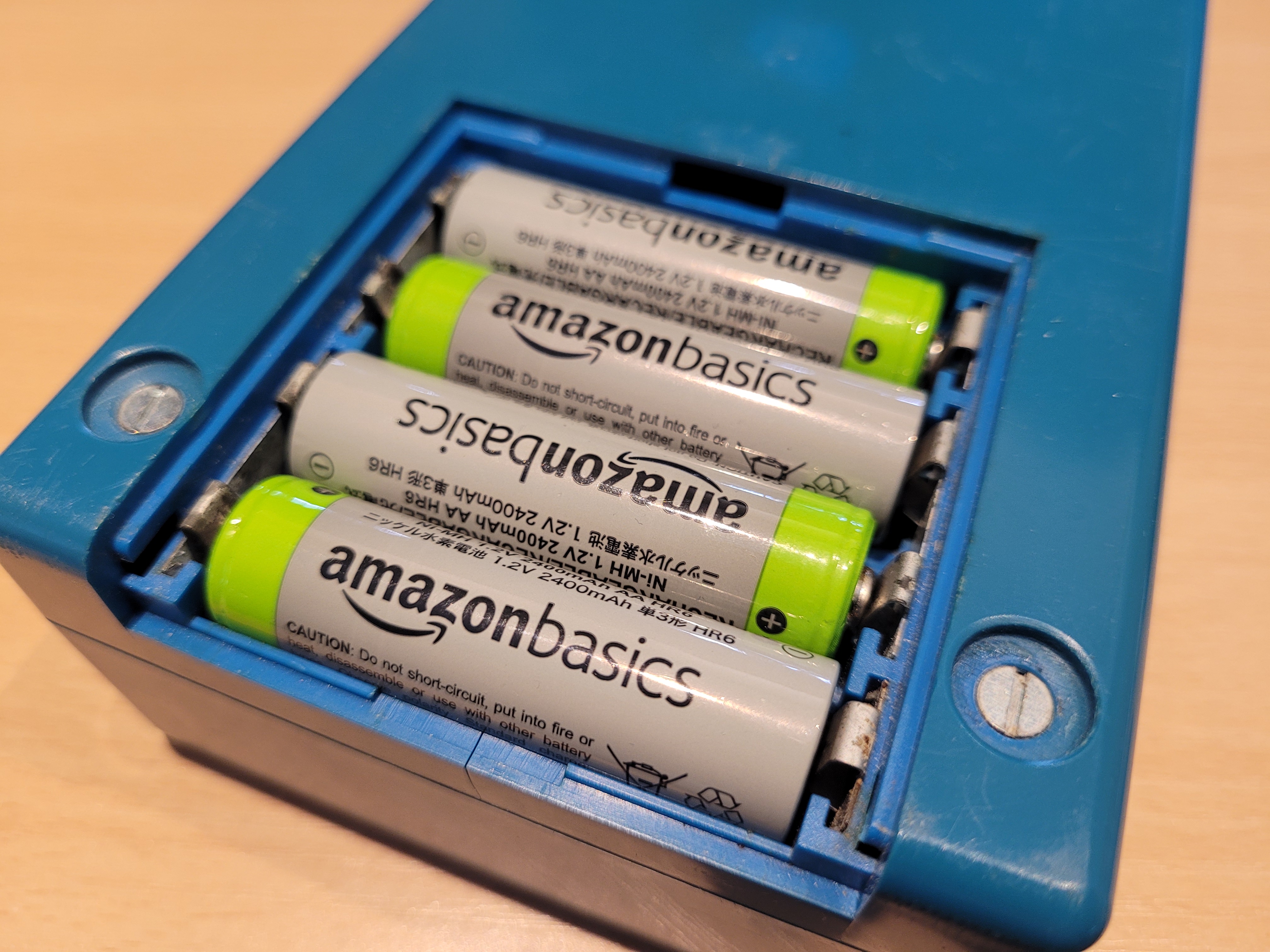
| Weight (with batteries) | 0.436 kg | 4 × AA NiCad/NiMH |
| Power supply | 4.8 V DC | 4 × AA rechargeable batteries |
| Interface connector | 25-way D-type (female) | |
| RS-232 direct | 9600 bd · 8N1 | Do not toggle DTR/RTS |
| Dial-up modem | 300 bd · 7E1 | V21 originate, XON/XOFF |
| RAM options | 32K / 64K / 160K | 2,000 / 4,000 / 10,000 calls |
| Standby current | 180 µA | ~2 mA during active call |
| Timing resolution | 125 mS | Answered outgoing; 1 s for others |
| Clock accuracy | ≤ 1 sec/day | Calendar valid to year 2099 |
| A2D channels | 2 | Battery voltage + line voltage |
| Battery voltage | raw × 5.0 / 255 | e.g. 248 raw → 4.86 V |
Differences from Mark I
The Mark I and Mark II are hardware identical — the same PCBs, the same components, the same physical enclosure dimensions. The fundamental difference is entirely in the firmware.
| Feature | Mark I | Mark II |
|---|---|---|
| Hardware | Identical | |
| Direct RS-232 | Yes — 9600 bd 8N1 | Yes — 9600 bd 8N1 |
| Dial-up | 300 bd V21 | 300 bd V21 |
| Protocol | Plain text (human readable) | Binary byte commands |
| Firmware | EPROM — original image | EPROM — entirely rewritten |
| BT livery | British Telecom (pre-1991) | BT Piper (post-1991) |
Firmware Architecture
The Mark I firmware stored all terminal commands and human-readable responses directly in the EPROM. Anyone with a modem could dial into a Monolog Mark I and — provided they got past the password prompt — interact with the unit directly using plain text commands such as STATUS, TIME and DL, receiving readable responses in return.
The Mark II firmware was entirely rewritten around a binary protocol, requiring the DIALOG software running on the PC to act as an interpreter. Commands are sent as:
Command frame sent to Monolog
Response frame returned by Monolog
Without DIALOG (or equivalent software) to decode these frames, a raw connection to a Mark II produces only binary data — providing a degree of security by obscurity that the plain-text Mark I lacked. The rewritten firmware also likely introduced flexibility for ROM images to be updated in the field.
Known Fault — Enclosure Cracking
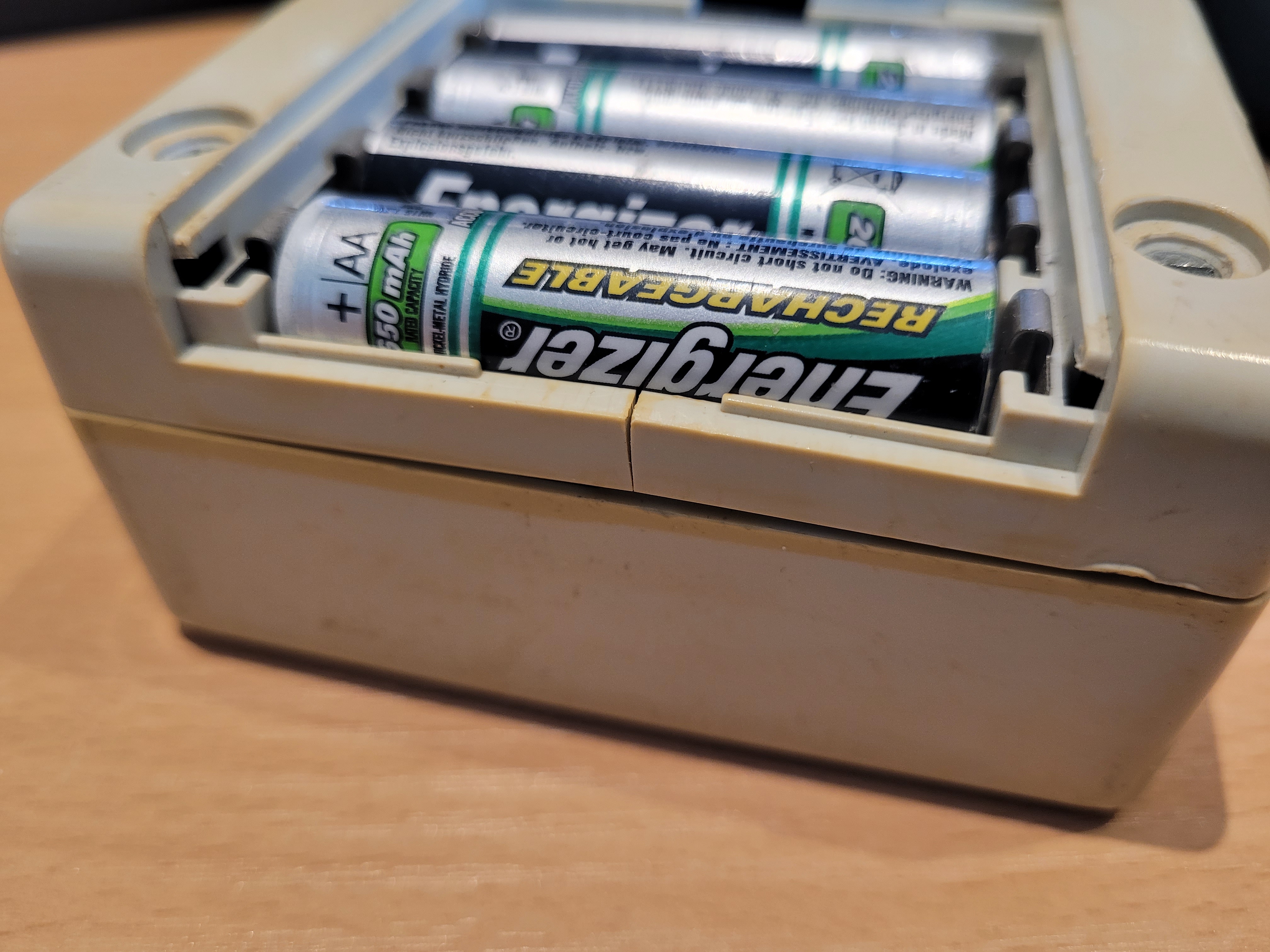
A common structural weakness affects both plastic enclosure variants. The spring clips that retain the four AA batteries exert a persistent outward pressure on the moulded plastic case, eventually causing a crack to develop along the seam line. The fault is progressive — once started, normal handling accelerates it. It is likely that this design weakness was a contributing factor in BT's decision to move to a metal enclosure for later Mark II production runs.
Mark II Photographs
Unit photographs to be added